The Mois sans tabac kit is a free quit-smoking support kit offered by Santé publique France: a 40-day programme, a savings wheel and two information leaflets. It is complemented by the Tabac info service app, 39 89 and, where needed, prescription nicotine replacement therapies that are reimbursed. Adult smokers who choose vaping can add a simple starter kit with the right nicotine strength.
Mois sans tabac returns in November 2026 for its 11th edition, with registrations open since 1st October[1]. This guide explains what the official kit contains, how to get it, what the French health insurance scheme provides for nicotine replacement therapies, and the criteria for choosing a first e-cigarette kit when you want to quit smoking.
Key points
- The official kit: a “40-Day Programme” booklet, a savings wheel, a “Tools” leaflet and a “Healthcare Professionals” leaflet[2].
- How to get it: register at mois-sans-tabac.fr, then order the kit online; kits are also available from pharmacies[1][3][4].
- Free support: the Tabac info service e-coaching app and 39 89, for support from a tobacco cessation specialist[1].
- Nicotine replacement therapies: the vast majority are reimbursed at 65% with a prescription[6].
- A starter vape kit: a simple mouth-to-lung device and an e-liquid with the appropriate nicotine strength.
The official Mois sans tabac 2026 kit: what it contains
According to Santé publique France, the quit-smoking kit includes four items[2]:
- the “40-Day Programme” booklet: daily advice and challenges to prepare for quitting over 10 days, then maintain it for 30 days;
- the savings wheel: helps you calculate the money saved by quitting smoking;
- the “Tools” leaflet: presents the Tabac info service tools and their benefits for quitting;
- the “Healthcare Professionals” leaflet: encourages users to seek support from a healthcare professional and explains how to access it.
The kit information sheet was updated on 15 October 2026[2]; the announcement for the 2026 edition does not indicate any change to its contents[1].
How to get the kit and free support
The starting point is registration at mois-sans-tabac.fr, open from 1st October 2026[1]. The Tabac info service website describes the kit as “a small gift to help you with your challenge” and lets you order it online[3]. Several regional organisations and professionals indicate other ways to obtain it:
- from pharmacies: the Ordre national des pharmaciens announces that quit-smoking support kits will be available in pharmacies for the 2026 edition[4];
- by download: ARS Hauts-de-France states that the tools are available free of charge, to download from tabac-info-service.fr or collect from pharmacies[5].
The paper kit is only one part of the scheme. The Tabac info service e-coaching app offers a free programme[1], with advice from tobacco cessation specialists to track your progress[3]. Calling 39 89 provides free support from a tobacco cessation specialist, via a standard-rate call from Monday to Saturday, 8 am to 8 pm[1].
The initiative attracted more than 117,000 registrations in 2025. According to Santé publique France, quitting for 30 days makes you five times more likely to quit in the long term[1]. For details of the challenge itself, see our article on Mois sans tabac.
Nicotine replacement therapies: patches, gums and reimbursement
Nicotine replacement therapies come in two main forms. Patches deliver nicotine continuously through the skin. Fast-acting oral forms (chewing gums, lozenges, pastilles, oral sprays and inhalers) help with sudden cravings to smoke. The French National Authority for Health recommends combining patches and oral forms[6].
Regarding reimbursement, the French health insurance scheme specifies that[6]:
- the vast majority of nicotine replacement therapies have been reimbursed at 65% since 1st January 2019, with complementary health insurance potentially covering the remainder;
- a prescription is required for reimbursement;
- they can be prescribed by a doctor (including an occupational health doctor), midwife, nurse, dental surgeon or physiotherapist;
- reimbursement is no longer capped each year, and some sprays and inhalers remain non-reimbursable.
The choice of method should be discussed with a healthcare professional. Our article on methods for quitting smoking compares the main options.
Starter vape kits: how to choose your first kit
E-cigarettes are not medicines and are not part of the official kit, but many adult smokers use them to move away from cigarettes. Our article on the Cochrane review explains what the research says on the subject. When starting out, three criteria matter most.
- The type of device: a pod (small battery and cartridge) or a simple kit (battery and clearomiser) can be used within minutes, without complex settings.
- The draw: a tight draw, known as mouth-to-lung or MTL inhalation, is closer to the sensation of smoking a cigarette. Many pods activate simply when you inhale.
- Battery life: a battery that lasts all day prevents you from being without a device when a craving strikes.
| Kit type |
Who it is for |
Draw |
Maintenance |
| Pre-filled pod |
smokers who want the simplest option |
tight, inhale-activated |
sealed cartridge to replace when empty |
| Refillable pod |
smokers who want to choose their e-liquid and adjust their nicotine |
tight, sometimes adjustable |
regular refilling, cartridge to replace when the coil wears out |
| Simple kit (battery and clearomiser) |
smokers who want more battery life and capacity |
tight to slightly airy, depending on airflow |
refilling and coil replacement |
| Box mod with clearomiser |
vapers already comfortable with equipment |
often airy |
power settings, wider range of coils |
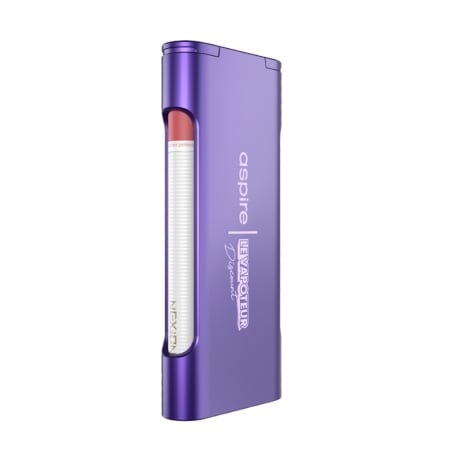
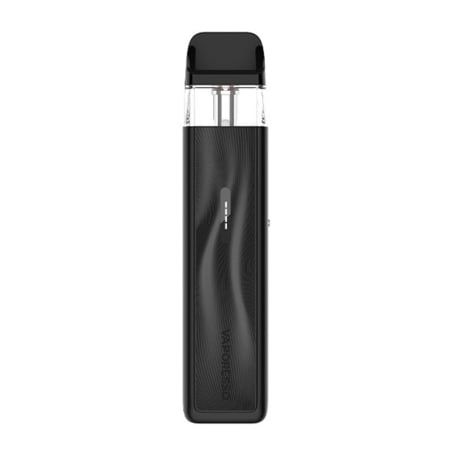
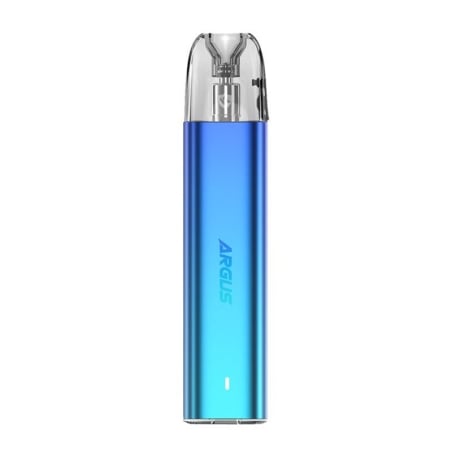
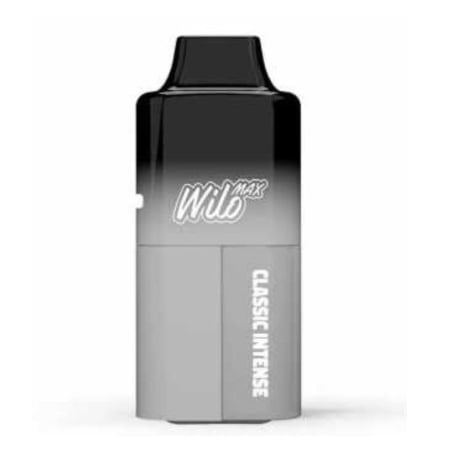
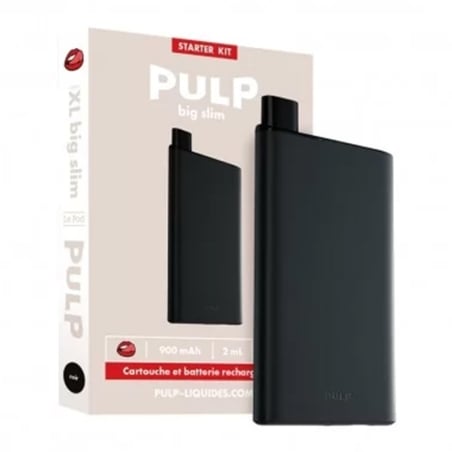
The differences between pre-filled and refillable pods are explained in detail in our article on rechargeable puffs and pods. Here is a selection of kits designed for beginners:
View the Beginner selection
What nicotine strength should you choose when starting out?
Your nicotine strength should be chosen according to your cigarette consumption and dependence, up to the 20 mg/ml limit in France. Too low and the urge to smoke may return; too high and it can cause headaches. The aim is to use the strength that removes the need for cigarettes, then gradually reduce it.
As a guide, light smokers often start between 3 and 6 mg/ml, average consumption around 8 to 12 mg/ml, and heavy smokers between 16 and 20 mg/ml. Our article on the nicotine contained in a cigarette explains these guidelines, and the Fagerström test helps assess dependence. If in doubt, a healthcare professional or 39 89 can help adjust the dosage.
Nicotine salts or regular nicotine?
Regular nicotine produces a more noticeable throat hit as the strength increases. Nicotine salts make inhalation smoother at the same strength, which is why they are popular with former heavy smokers using a tight-draw pod. Our article on nicotine salts explains how they work in detail, and the nicotine salt e-liquids category brings together these products.
E-liquids, refills and coils: completing your kit
To avoid running out during the challenge, it is best to have:
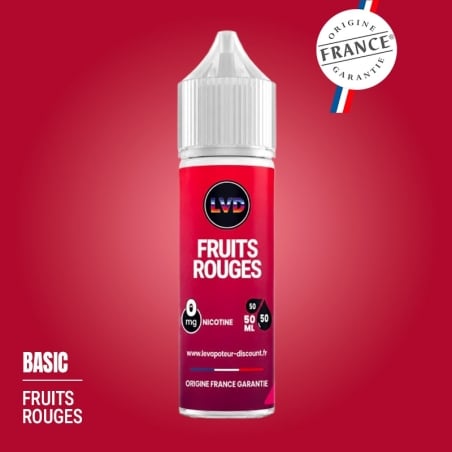
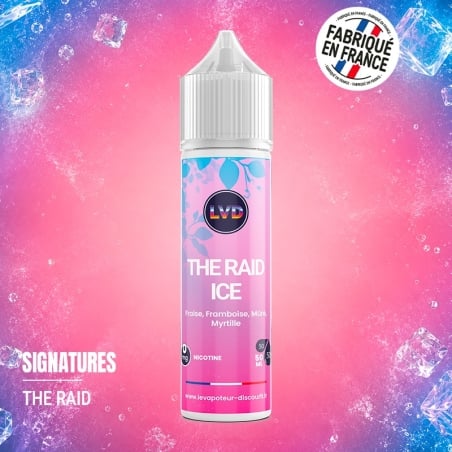
- one or two e-liquids: many former smokers start with a tobacco-like flavour, grouped under Classic e-liquids, before exploring other flavours;
- spare cartridges or coils: when the flavour fades or becomes harsh, the coil is worn out. Coils should be selected according to the model, and our article on coil lifespan provides wear guidelines.
To compare other models, see our top e-cigarettes for quitting smoking.
Frequently asked questions about the Mois sans tabac kit
How can I receive the Mois sans tabac 2026 kit?expand_more
Register at mois-sans-tabac.fr, then order the kit online. Kits are also announced in pharmacies, and the documents can be downloaded.
Is the Mois sans tabac kit free?expand_more
Yes. The kit, the Tabac info service e-coaching app and support from a tobacco cessation specialist on 39 89 are free. Calls to 39 89 are charged at the standard rate.
What does the official Mois sans tabac kit contain?expand_more
According to Santé publique France, it includes a “40-Day Programme” booklet (10 days of preparation and 30 days of quitting), a savings wheel, a “Tools” leaflet and a “Healthcare Professionals” leaflet.
Are nicotine patches and gums reimbursed?expand_more
The vast majority are reimbursed at 65% by the French health insurance scheme, with a prescription from an authorised healthcare professional. Some sprays and inhalers are not covered.
Which e-cigarette kit should I choose when starting out?expand_more
A pod or simple kit with a tight draw and a battery that lasts all day. The pre-filled pod is the simplest; a refillable pod lets you choose your e-liquid and strength.
What nicotine strength should I choose with a first kit?expand_more
It depends on cigarette consumption: from 3 to 6 mg/ml for a light smoker, up to 16 to 20 mg/ml for a heavy smoker, with 20 mg/ml being the maximum permitted. The Fagerström test helps you assess your level.
Nicotine salts or regular nicotine to start with?expand_more
Nicotine salts make inhalation smoother at the same strength and are often suitable for former heavy smokers; regular nicotine provides a more noticeable throat hit.
Who can I contact for support during Mois sans tabac?expand_more
39 89 puts you in touch with a tobacco cessation specialist, from Monday to Saturday, 8 am to 8 pm. A doctor, midwife or nurse can also support you in quitting and prescribe nicotine replacement therapies.
Sources
[1] Santé publique France. Mois sans tabac 2026: registration opens. Press release, 1st October 2026, accessed on 16 October 2026.
[2] Santé publique France. Mois sans tabac: the quit-smoking kit. Published on 10 October 2025, updated on 15 October 2026, accessed on 16 October 2026.
[3] Tabac info service. Mois sans tabac. Accessed on 16 October 2026.
[4] Ordre national des pharmaciens. Mois sans tabac: get the campaign tools. Accessed on 16 October 2026.
[5] ARS Hauts-de-France. Mois sans tabac 2026: 11th edition. Accessed on 16 October 2026.
[6] Assurance maladie. Quitting smoking: what support is available for nicotine replacement therapies?. ameli.fr, updated on 4 December 2025, accessed on 16 October 2026.
This article is for information only and does not replace advice from a healthcare professional. E-cigarettes are not medicines. Vaping products are prohibited for minors and are not intended for non-smokers. Nicotine is highly addictive. For support with quitting smoking: Tabac info service, 39 89.