Refillable puff, pre-filled pod or refillable pod: the differences
Battery, cartridge, tank, nicotine, end of life and the 2025 law: what sets a refillable puff apart from a pre-filled or refillable pod.
Battery, cartridge, tank, nicotine, end of life and the 2025 law: what sets a refillable puff apart from a pre-filled or refillable pod.
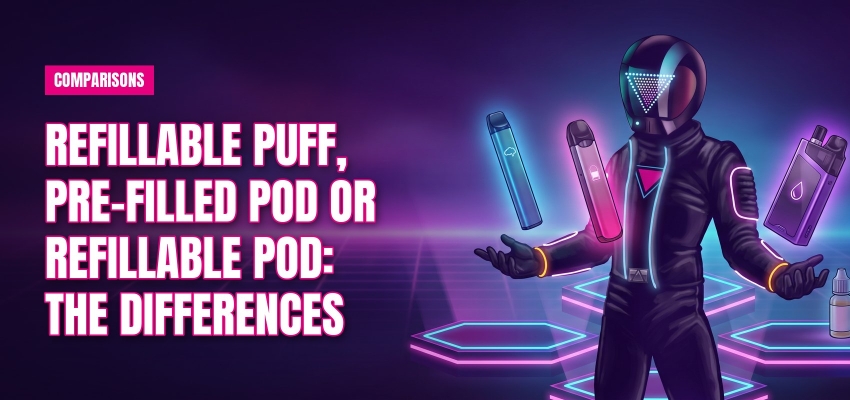
A rechargeable puff, a prefilled pod and a refillable pod all have a rechargeable battery; what distinguishes them is how the e-liquid is replaced. A prefilled pod is replenished with a sealed cartridge that is replaced, a refillable pod with a bottle of e-liquid poured into its cartridge, and a rechargeable puff, in a compact, no-settings format, with either of these solutions depending on the model.
Since disposable puffs were banned on 26 February 2025, the terminology has become blurred: rechargeable puffs, pods, refills and cartridges are used to refer to very similar devices. This comparison focuses on verifiable technical criteria (how the liquid is replaced, the coil, nicotine choice, maintenance and end of life) and the legal framework, to help adult smokers who want to quit find their way around.
Law No. 2025-175 of 24 February 2025 created Article L3513-5-1 of the French Public Health Code. Since 26 February 2025, it has prohibited the sale, distribution or free provision of vaping devices that are prefilled with liquid and cannot be refilled, whether or not they have a rechargeable battery. The same article specifies that this ban does not apply to cartridges[1].
Service-public.fr summarises the rule: it is prohibited to sell or offer disposable electronic cigarettes, while rechargeable models remain permitted. The fine can reach €100,000, and €200,000 for repeat offences[2]. Our article on the puff ban looks back at the context of this legislation.
Important point: a rechargeable battery alone is not enough. A puff with a prefilled tank that cannot be refilled remains banned, even if its battery can be recharged[1].
| Criterion | Prefilled pod | Refillable pod | Rechargeable puff |
|---|---|---|---|
| Battery | rechargeable | rechargeable | rechargeable |
| Liquid replacement | sealed cartridge replaced | bottle poured into the cartridge | cartridge replaced or tank refilled, depending on the model |
| Coil | built into each cartridge | built into the cartridge, which is used for several refills | built in, depending on the model |
| E-liquid choice | limited to the brand's cartridges | unrestricted | limited or unrestricted, depending on the model |
| Nicotine strength choice | from the strengths available in cartridges | any strength up to 20 mg/ml | depending on the model |
| Settings | few or none | often airflow, sometimes power | few or none |
| Handling | minimal | regular refilling | minimal to moderate |
Capacity and nicotine limits are set by the Decree of 19 May 2016: 2 ml for prefilled tanks or cartridges, 10 ml for refill bottles and a maximum of 20 mg/ml of nicotine[3]. Article L3513-15 of the French Public Health Code entrusts the Minister for Health with setting these volumes by decree[4].
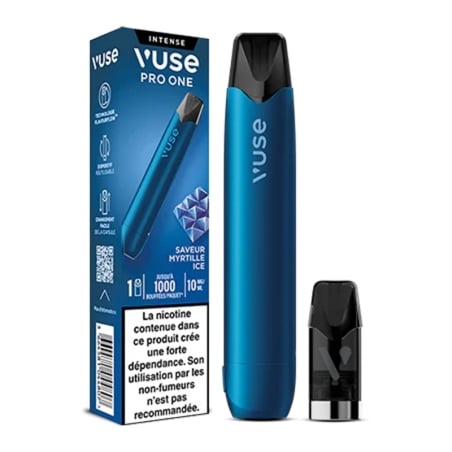
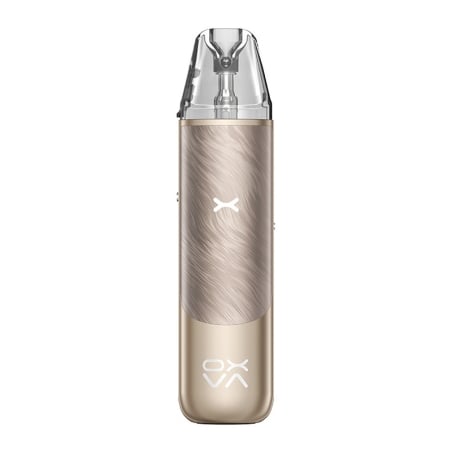
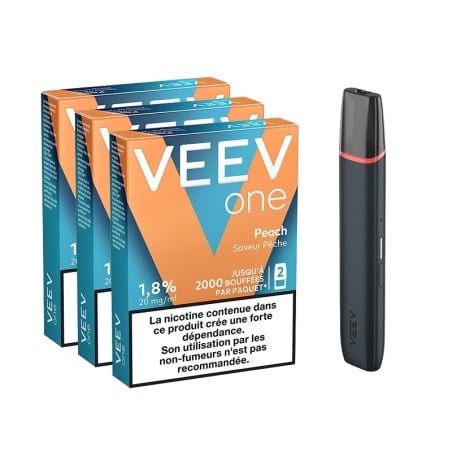
A prefilled pod combines a small rechargeable battery with a cartridge already filled with e-liquid, which also contains the coil. You click in the cartridge, vape, and replace it with a new one when it is empty: it cannot be refilled. Most models are draw-activated, without a button, and use mouth-to-lung vaping: the vapour first passes through the mouth, with a tight draw similar to that of a cigarette.
It is the simplest solution to use. In return, the choice of flavours and strengths depends on what the brand offers in cartridges, and every empty cartridge becomes waste. Well-known models of this type are presented in our article on pods.
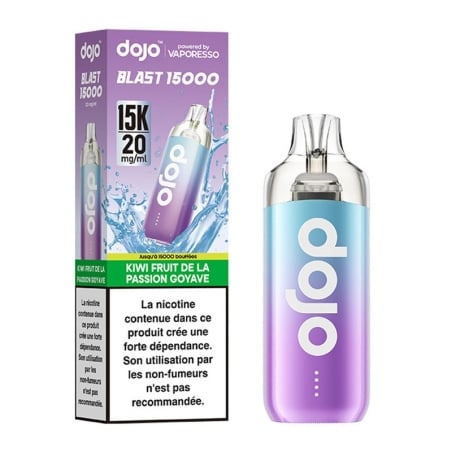
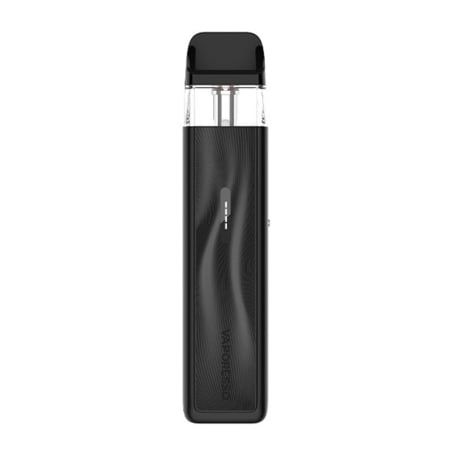
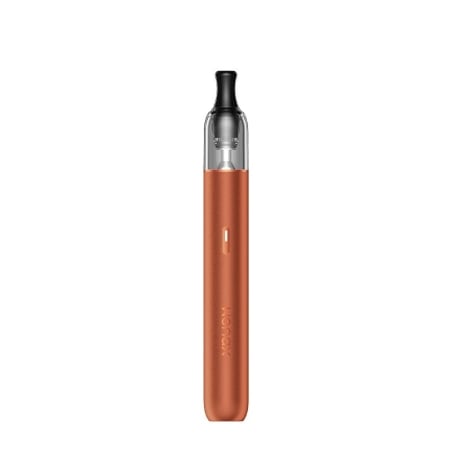
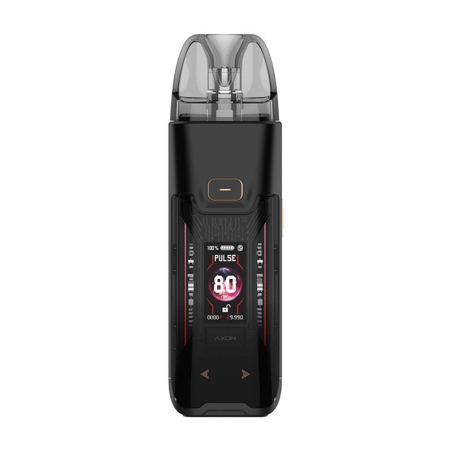
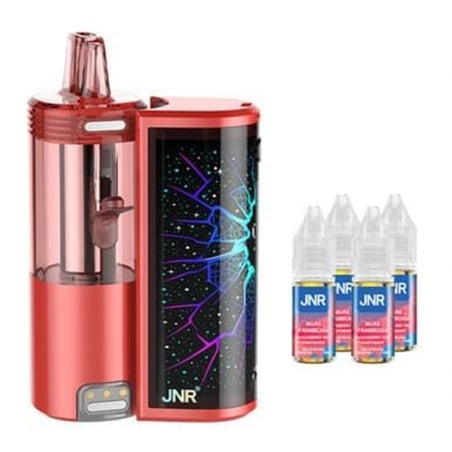
A refillable pod uses an empty cartridge, with its built-in coil, which you fill yourself from a bottle of e-liquid. The same cartridge is used for several refills, until the coil wears out: the flavour weakens or becomes harsh, and the cartridge must then be changed. Many models offer airflow adjustment, and sometimes power adjustment.
This type of device requires slightly more handling, but lets you freely choose your e-liquid and nicotine strength, up to 20 mg/ml, and adjust that strength throughout your withdrawal. The steps for refilling are detailed in our article on refilling with e-liquid, and coil wear in our article on the lifespan of a coil.
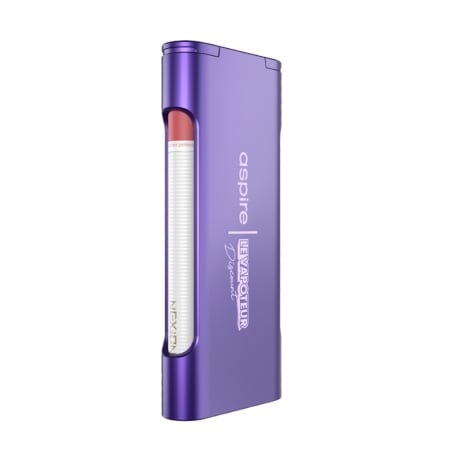
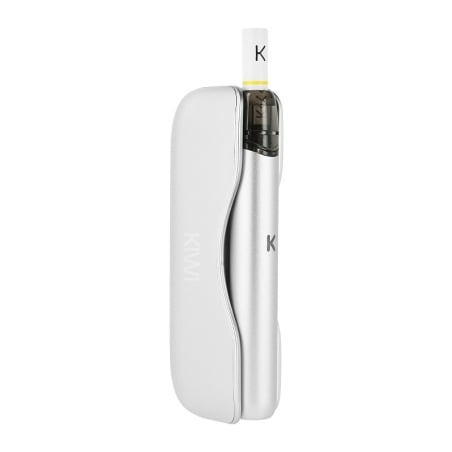
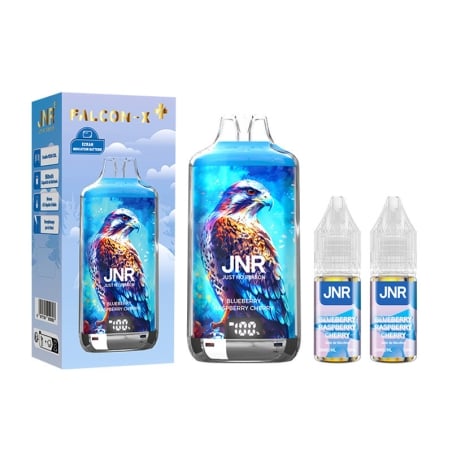
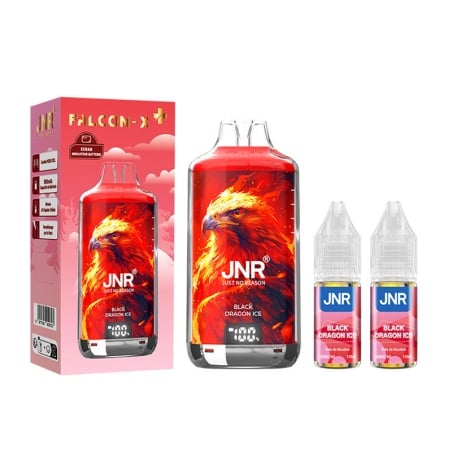
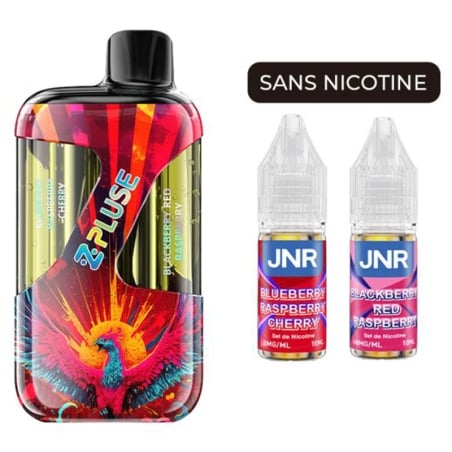
The word puff originally referred to a disposable, prefilled electronic cigarette with no settings. Today, a rechargeable puff retains this compact, straightforward format, but its battery can be recharged and its liquid replaced. Depending on the model, this is done with a prefilled cartridge that is replaced, making it similar to a prefilled pod, or with a tank filled from a bottle, making it similar to a refillable pod.
Before choosing, three questions help identify which category a model belongs to:
The puff counts shown on these products are manufacturer estimates measured in a laboratory: they depend on the length and frequency of puffs. For the difference compared with a standard electronic cigarette, see our article on the difference between a puff and an electronic cigarette.
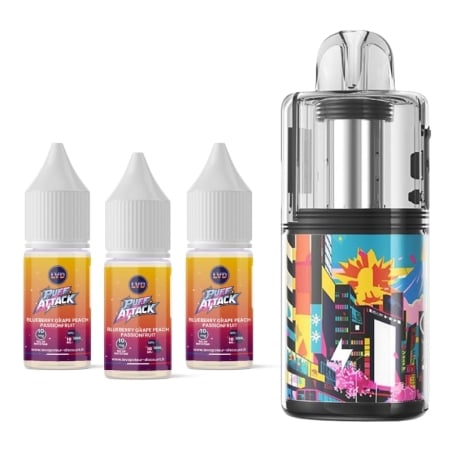
Whatever the device, the law limits nicotine to 20 mg/ml[3]. The difference lies in the choice available: with a prefilled pod or a cartridge-based puff, you choose from the strengths offered by the brand; with a refillable device, you can choose any retail e-liquid and reduce your strength in small steps.
Compact devices with a tight draw are often used with nicotine salts, which make inhalation smoother at the same strength. Our article on nicotine salts explains how they work. Choosing a starting strength can usefully be discussed with a healthcare professional or Tabac info service.
A used electronic cigarette, including a puff, must not go in the household bin. Ademe advises returning it to the retailer or handing it to the delivery driver, or placing it in a collection bin in a shop or at a recycling centre. It then enters the electrical and electronic equipment waste stream, where it is dismantled, decontaminated if necessary and its components sorted[5].
A refillable pod produces less waste per millilitre vaped than a prefilled pod, since the same cartridge is used for several refills. In both cases, the battery, which lasts much longer than the cartridges, remains the main waste item at the end of the device's life.
[1] French Public Health Code, Article L3513-5-1, created by Law No. 2025-175 of 24 February 2025, in force since 26 February 2025. Légifrance.
[2] Service-public.fr. Disposable electronic cigarettes: sales ban since 26 February 2025. Directorate of Legal and Administrative Information, 27 February 2025.
[3] Decree of 19 May 2016 on nicotine-containing vaping products. Official Journal of the French Republic, Légifrance.
[4] French Public Health Code, Article L3513-15. Légifrance.
[5] Ademe. What to do with my objects and waste: electronic cigarette. Ecological Transition Agency, accessed on 21 September 2026.
This article is for information only and does not replace advice from a healthcare professional. Vaping products are prohibited for minors and are not intended for non-smokers. Nicotine is highly addictive. For help to stop smoking: Tabac info service, 39 89.
Read the summary with

About the author
GaëlleAn SEO writer specialising in the vaping world for 5 years, I lend my pen to Le Vapoteur Discount to guide smokers who wish to quit cigarettes [...]
Add a comment