Vape: the end of online sales, taxes, and tobacconist monopoly?
Vapers and the vaping industry are facing the heavy measures of the Finance Bill 2026 announced this Tuesday, October 14. Sign the petition!
Vapers and the vaping industry are facing the heavy measures of the Finance Bill 2026 announced this Tuesday, October 14. Sign the petition!
The Lecornu government had until the second Tuesday of October to submit its Finance Bill 2026. Deadline met... And as Halloween approaches, the French vaping industry has reason to shudder, while the No Tobacco Month of November is shaping up to be more political than ever.
While all eyes were turned toward Brussels and the upcoming European measures on, among other things, taxation and the ban on flavors, it is ultimately the French government, freshly risen from its ashes, that opens the ball. Article 23 taxes "all smoking products" and profoundly redefines the way vaping could be sold and regulated.
The text introduces several major measures which, together, would change the vaping ecosystem in France:
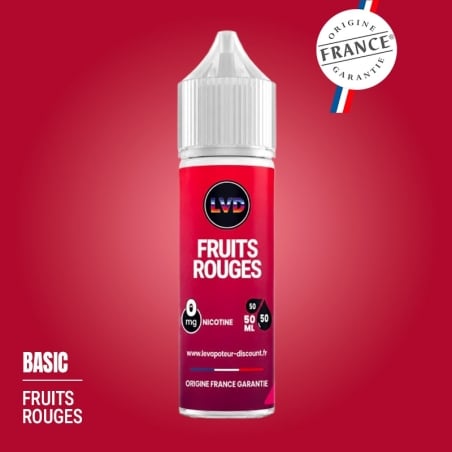
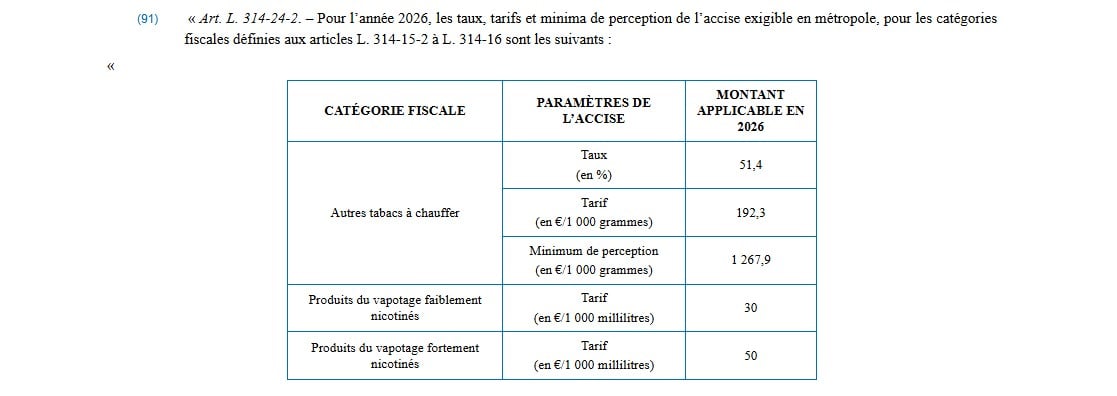
With a differentiation based on nicotine level, either a tax of €0.03 per mL for liquids up to 15 mg/mL, and €0.05 per mL beyond that. Concretely, a 50 mL bottle at 0 mg would face an increase of approximately +€1.50, while a 10 mL bottle with a high content (above 15 mg/mL) would increase by +€0.50.
« The tax category of low-nicotine vaping products includes products for which the nicotine content of the liquid is between zero and fifteen milligrams per milliliter.
« The tax category of highly nicotine-containing vaping products includes products for which the nicotine content of the liquid exceeds 15 milligrams per milliliter.
Online sales to private individuals would simply be prohibited.
b) After article L. 3513-18-3, article L. 3513-18-4 is inserted as follows:
« Art. L. 3513-18-4. – Distance selling to a natural person who acts for purposes that do not fall within the scope of their commercial, industrial, craft, professional, or agricultural activity and distance purchasing, by such a person, within, to, or from the national territory of the products referred to in article L. 3513-18-1 are prohibited.
« These products found in postal parcels or in parcels transported by express freight companies are presumed to be subject to prohibited operations pursuant to the first paragraph. » ;
In order to collect this tax, retail sales would only be possible through tobacconists or approved establishments by the administration (with criteria of honorability, training, excise collection capacity, etc.). Non-approved vape shops would lose their ability to sell as they do today. The problem: heavy administrative and financial constraints could await vape shop owners seeking this approval.
« Art. L. 3513-18-1. – The following are subject to this section: products assimilated to manufactured tobacco within the meaning of article L. 314-3-1 of the code on taxes on goods and services that are vaping products within the meaning of article L. 3513-1 of this code.
« Art. L. 3513-18-2. – The retail sale of the products referred to in article L. 3513-18-1 is carried out under the following conditions:
« 1° By a tobacco retailer within the tobacco outlet governed by article L. 3512-14-3;
« 2° In a point of sale for tobacco, tobacco products or ingredients defined in article L. 3512-2 and located in the communities governed by article 73 of the Constitution;
« 3° In one or more establishments approved by the administration, equipped with human and material resources capable of collecting the excise duty, operated by natural persons who meet the conditions of honorability, integrity, legal capacity, and training determined by decree of the Council of State and who are not located in places where the sale of tobacco is prohibited pursuant to article L. 3512-10.
Discover the full Finance Bill 2026 here.
France has developed over fifteen years a structured and responsible industry. Among its strengths:
Reducing all of this to the single model of tobacco shops is to deny the on-the-ground expertise and the risk-reduction ecosystem built around vaping.
The presence of the electronic cigarette in tobacco shops can help some smokers take the plunge. But the approaches differ:
Small vape shops offer personalized support and spend time with their customers: testing, advice, repairs, durable equipment, and education on nicotine dosage. They often favor rechargeable and repairable systems, which are more economical and more environmentally friendly in the long run.
Tobacco shops have time constraints, prioritize quick sales, and frequently offer very simple devices (puffs, heavily nicotine-dosed pods) that are easy to access but often less durable and less personalized.
Imposing a licensing process with heavy administrative and financial constraints on vape shops risks jeopardizing the quality of support, the diversity of the offering, and access for people in situations of nicotine dependency.
This is where the policy risks producing the opposite effect of what is intended. When legal channels are too restricted, consumers turn to the informal market — a space where quality, traceability, and safety disappear.
We have already seen it: in 2019 in the United States, counterfeit e-liquids containing vitamin E acetate were linked to an epidemic of severe lung diseases (more than 50 deaths and thousands of hospitalizations). More recently, certain parallel markets in Asia have seen products circulating that were adulterated with extremely dangerous substances (nicknamed "the zombie drug"). These episodes show that prohibition or drastic restriction encourages the proliferation of uncontrolled and potentially deadly products.
In France, banning online sales and complicating legal access (through a heavy licensing system) could:
The taxation as presented — if confirmed and cumulated with announced European levels — risks significantly increasing the cost of vaping, particularly for regular consumers and ex-smokers in situations of dependency and limited resources. These increases will affect all vapers.
The dreadful consequence: some would return to combustible cigarettes or turn to less safe parallel channels.
Nothing is decided yet: the bill has just been filed and is entering the parliamentary phase until December 2025. The examination period (assemblies, amendments, debates) is an opportunity to substantially amend the text. Measures can be softened, reconsidered, or clarified to better protect both public health and the industry.
The government has taken a strong stance to cast a "spell" on independent French vaping. Today, article 23 represents a hard option: taxation, end of online sales, recentering on approved channels.
But the parliamentary phase is a window: reasonable adjustments are possible to preserve access, support, and public health safety while introducing effective safeguards.
EDIT of October 17, 2025:
Faced with this Finance Bill 2026, which assimilates vaping to tobacco in order to tax it more effectively and recover revenue, French vapers and all players in the vaping industry, including Le Vapoteur Discount, are mobilizing to sign this petition calling for vaping to be removed from article 23.
Vaping is not smoking. A letter to our elected officials.
Sign the petition and join the movement!
Read the summary with

About the author
CaroleAn SEO writer specialising in the vaping world for over 6 years, I lend my pen to Le Vapoteur Discount to inform, advise and support vapers on a [...]
Add a comment